Software Development Life Cycle (SDLC): Everything You Need to Know

👋 Hello! I’m Ansari Anas, Passionate about DevOps. Currently upskilling in DevOps tools and practices to bridge the gap between engineering and technology. Passionate about learning, problem-solving, and contributing to efficient software delivery.
SKILLS:
🔹 Languages & Runtimes: Python, Shell Scripting
🔹 Cloud Technologies: AWS
🔹 Other Tools: Linux, Git, Jira,
🔹 Web Development: HTML, CSS, JavaScript React.js, Tailwind CSS
🤝Let's Connect & Grow:
If you find my profile suitable for the role you are searching for, please feel free to reach out to me at ansariii.5130@gmail.com
What is SDLC?
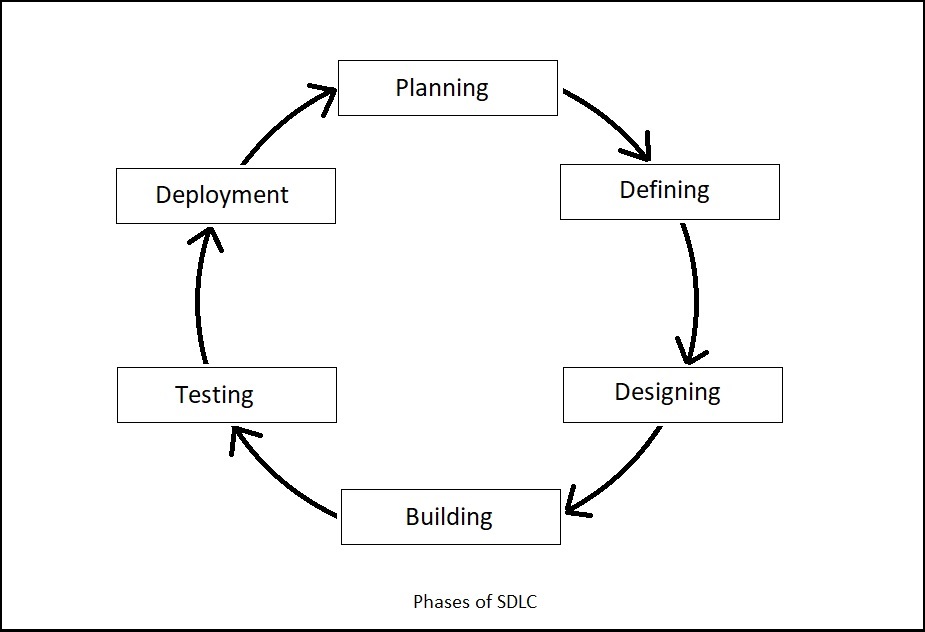
The Software Development Life Cycle (SDLC) is a process followed by the industry to design, develop, and test software products to ensure high quality. It consists of several phases, including Planning, Defining, Designing, Building, Testing, and Deployment. This is a standard process followed across the industry. The same process is repeated whenever a new feature or design is implemented in the software.
Defining
In this phase, customer requirements are documented. This document is called the Software Requirements Specification (SRS). It contains all the information related to the software, including its features, functionality, and design expectations. Feasibility also checked here whether the given feature is possible or not or it is beneficial for the business or not.
Designing
In the Designing phase there are two levels of design a High-Level Design (HLD) and Low-Level Design (LLD).
High level Design(HLD) :- In HLD, the following decisions are made:
System architecture (Monolithic or Microservices)
Frontend and backend frameworks
Database type (SQL or NoSQL)
Major system modules
High-level data flow
Third-party integrations
Deployment environment (cloud/on-premise)
Low level Design(LLD):- In LLD, the following details are defined:
Database tables or collections
Fields, relationships, and indexes
Classes and methods
APIs and request/response formats
Business logic and validations
Error handling and security rules
Building
In this stage, software development is started according to the requirements in the SRS document. The source code is pushed to a centralized code repository, usually using Git.
Testing
Software is deployed on a testing server to check whether it works as expected. This ensures all features function correctly working or not. Any issues that might occur in test server can be fixed immediately. The Quality Assurance (QA) team performs this testing task. They check the software thoroughly before it goes live.
Deployment
Once testing is completed and everything is working as expected, the software is deployed on the production server and becomes available for use by the end users or customers.
What is Agile Methodology?
Agile methodology is a modern project management and software development approach where work is done in small, manageable parts instead of completing everything at once.
Agile focuses on:
Customer satisfaction
Fast delivery
Continuous improvement
Flexibility to change requirements
In Agile, the project is divided into short cycles called sprints, and after every sprint, feedback is taken and improvements are made.
Key Features of Agile:
Work is delivered in small increments
Regular customer feedback
Quick response to changes
Team collaboration is very important
What is Waterfall Methodology?
Waterfall methodology is a traditional project management approach where work is completed in a fixed sequence of steps.
Each phase must be completed before moving to the next one, just like water flowing downward in a waterfall.
Key Features of Waterfall:
Clear and well-defined requirements
No changes allowed once development starts
Easy to manage for small projects
Documentation is very detailed
What is a Sprint?
A Sprint is a short, fixed-time period in Agile methodology during which a team completes a specific amount of work.
Usually, a sprint lasts 1 to 4 weeks.
During a sprint:
Tasks are planned at the beginning
Development and testing happen together
A working product is delivered at the end
Purpose of a Sprint:
Deliver usable features quickly
Get fast feedback
Improve product step by step
Sprints help teams work faster and stay focused.
What is Jira Tool?
Jira is a project management and issue-tracking tool developed by Atlassian.
It is mainly used to manage Agile and Scrum projects.
What Jira is used for:
Creating and tracking tasks (issues)
Managing sprints and backlogs
Tracking bugs and defects
Monitoring project progress with reports
Key Features of Jira:
Scrum and Kanban boards
Sprint planning and tracking
Issue and bug tracking
Powerful reporting and dashboards
Jira helps teams stay organized and deliver projects on time.
Agile vs Waterfall Methodology
Agile and Waterfall are two different project management methodologies. The main difference between them is how work is planned, executed, and delivered.
Key Differences Between Agile and Waterfall
| Feature | Agile Methodology | Waterfall Methodology |
| Approach | Iterative and incremental | Linear and sequential |
| Flexibility | Very flexible to changes | Changes are difficult |
| Project Planning | Done in small parts (sprints) | Done once at the beginning |
| Customer Involvement | Continuous involvement | Limited involvement |
| Delivery | Frequent and small releases | Single final delivery |
| Testing | Continuous testing | Testing at the end |
| Risk | Low risk due to early feedback | Higher risk if requirements change |
| Best For | Large, complex, and evolving projects | Small, simple, and fixed-scope projects |
When to Use Agile?
Agile is best used when:
Requirements change frequently
Customer feedback is important
Fast delivery is needed
Project is complex or long-term
Example: Software applications, web platforms, DevOps projects
When to Use Waterfall?
Waterfall is best used when:
Requirements are clear and fixed
Changes are not expected
Project is small and well-defined
Strong documentation is required
Example: Construction projects, manufacturing, government projects
Role of DevOps Engineer in SDLC
A DevOps engineer automates the SDLC process to improve efficiency and reduce delivery time. They write automation scripts, set up CI/CD pipelines, and use tools like Jenkins (CI), Argo CD (CD), Docker, and Kubernetes. This reduces manual work, ensures faster deployment, and maintains high-quality software delivery.
Short Forms & Abbreviations
SDLC – Software Development Life Cycle
SRS – Software Requirements Specification
HLD – High-Level Design
LLD – Low-Level Design
QA – Quality Assurance
CI/CD – Continuous Integration / Continuous Deployment
UI – User Interface
UX – User Experience
Conclusion
The Software Development Life Cycle (SDLC) provides a clear roadmap for building high-quality software efficiently and systematically. Each phase — from requirement gathering to deployment — plays a vital role in ensuring that the final product meets user expectations.
With the rise of modern technologies, the role of DevOps in SDLC has become more crucial than ever. Automation, continuous integration, and continuous deployment have made the process faster and more reliable.


